
How Each Section of a Real Estate Landing Page Helps Convert Visitors into Leads
In today’s digital age, a real estate landing page is more than just a web page—it’s the virtual salesperson for your business. When designed strategically, each section rhythm and flow of a landing page plays a crucial role in directing visitors from casual interest to serious inquiry or booking.
Now let ‘s see how each part of a well-structured real estate landing page contributes to leads generation, building trust and conversion business.
1. Hero Section-Creating the First Impression
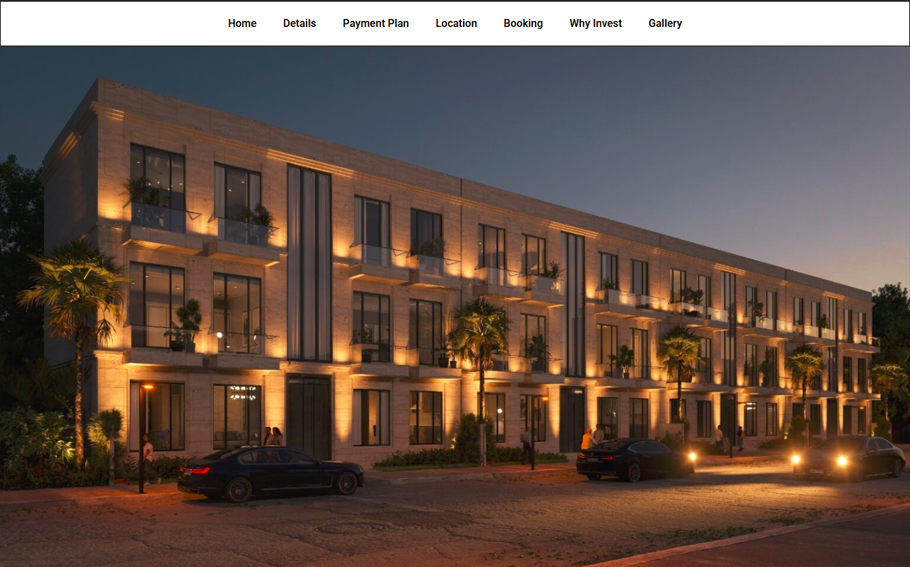
Hero section is the first thing that most visitors to your site see. Usually it has one large high-quality image of the property, a brief title and clear navigation menu.
Why It’s Important
Instant captivation: Whether visitor stays or leaves is decided in the first few seconds. A beautiful image + strong title help capture interest. Showcases a sense of lifestyle and value: Hero image provides a glimpse into what type the property really is and what kind of lifestyle it comes with-whether modern, luxury, affordable or family oriented.
Aids exploration: A neat navigation bar (with choices like “Details,” “Location,” “Payment Plan,”To Book”) allows visitors easily to find what they are looking for without difficulty.
A strong hero section sets the emotional tone for the entire page, makes visitors feel like scrolling down more.
️ 2. Description or Overview Section-Telling the Story
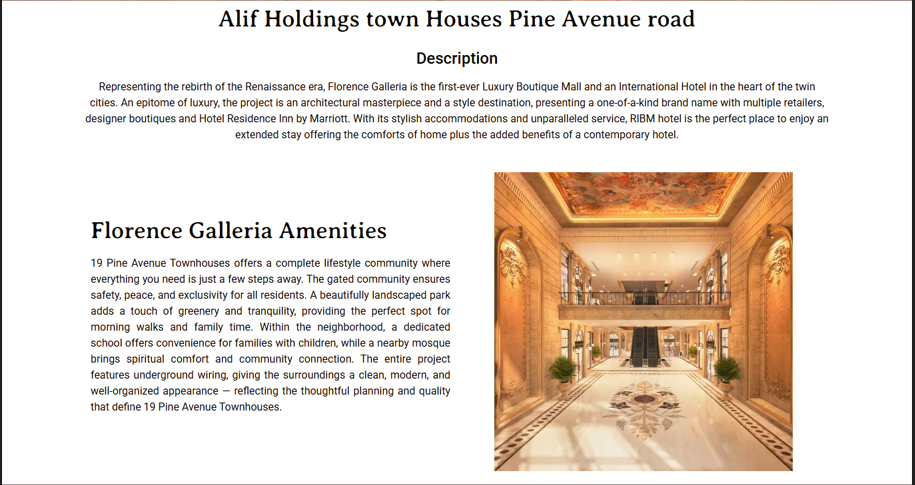
Once you have caught their interest above, the description section gives them an introduction to the project and explains why this place is so different.
Why It’s Important
Builds understanding: This section will educate visitors on the project’s idea, designing philosophy and lifestyle benefits just like it transmitted. CONNECTING ON AN EMOTIONAL LEVEL: Instead of getting bogged down in technical details, a good “Connecting on an Emotional Level” section helps prospective buyers to visualize themselves actually living or investing here.
ESTABLISHING PROFESSIONALISM: A well-written summary shows that the broker or developer understands the buyer’s way of thinking and is able to communicate value.
In essence, the narrative takes raw information and moulds it into an emotionally satisfying whole — an important factor in real estate decisions.
3. Amenities and Features Section – The Lifestyle Details
The amenities part is where the property’s most important features are introduced. This may include visuals and texts on things such as parks, gyms, pools, schools, shopping districts, or community centres.
Why It Matters
Stimulates Desire: People don’t just buy real estate; they purchase convenience, comfort, and lifestyle as well. Enhances Appeal: Listing amenities increases the perceived value, allowing for more reasonable prices to be charged or construction opportunities to go forward. Offers something for different customer types: families, investors, professionals. By displaying these options each user can find some personal reason that interests them.
A well-structured amenities area often integrates icons, photos or short descriptors— all combining to depict a holistic lifestyle.
4. Consultant or Contact Section – -To Turn Interest into Action
This is where the consultant and contacts are introduced. Often having his professional photo, a brief bio and a contact form.

Why It Matters
Builds Trust: Seeing a real person creates a feeling of sincerity. Buyers feel they are contacting a real, experienced consultant and not some distant company. Simplifies Communication: A quick form with fields for name, telephone and email address makes it easy for visitors to get in touch. Encourages Immediate Action: The “Call Now” or “WhatsApp” buttons make it easy for inquiries -especially from mobile customers.
Well, this part is essentially the landing page’s conversion engine. Without it, an otherwise beautiful page may still fail completely to capture leads.
5. Why Invest Section -Addressing the Buyer’s Logic
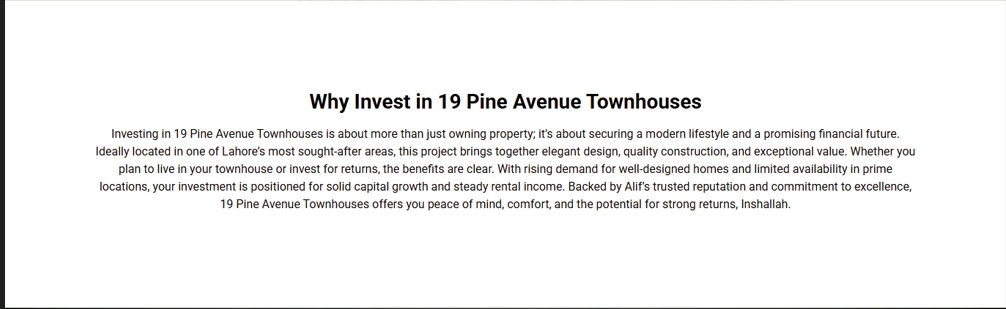
Additionally, after sparking emotional interest, a good landing page translates the rational side of the buyer’s brain through a ‘Why Invest‘ section.
Why It’s Important
Increases confidence: It lets potential buyers have a sense that the property’s attractiveness is matched by suitability for investment.
Instructs investors: By listing things such as growth potential, area development, or returns to come in future years, it defines this enterprise as both safe and profitable for the buyer.
Minimizes hesitancy: Many prospective buyers hesitate to take that next step. When the reasons for investing make sense, though, they feel more confident about making contact.
With this part both emotion and logic play their part, and visitors are given both the urge and a method to invest.
6. Location Section -Building Credibility and Keeping Practical Value
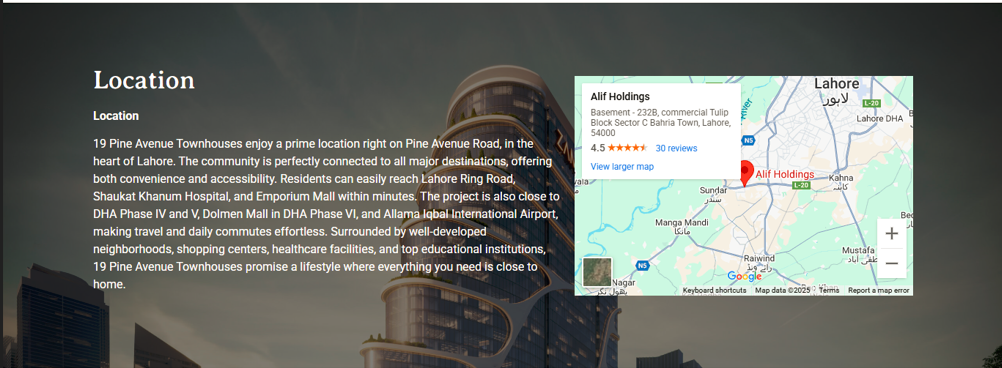
The location section typically includes an intro to the area and also a homegrown Google Map for easier navigation.
Why It’s Important
Enhances credibility: Giving people clear signals on the specific location you are not only get buyer confidence but remove any doubts about how to find it. Emphasises benefits: By pinpointing nearby landmarks, schools, hospitals, and shopping areas, the page gets across some real lifestyle value. Encourages participation: An interactive map allows users to independently investigate what’s there for themselves— and that breeds confidence.
Do you want to arrange a viewing of this property? If you do, then show the setting of the scene; do that clearly helps readers to turn curiosity about this location into trust and subsequently action.
7. Payment Plan Section – Making Decision-Making Easier
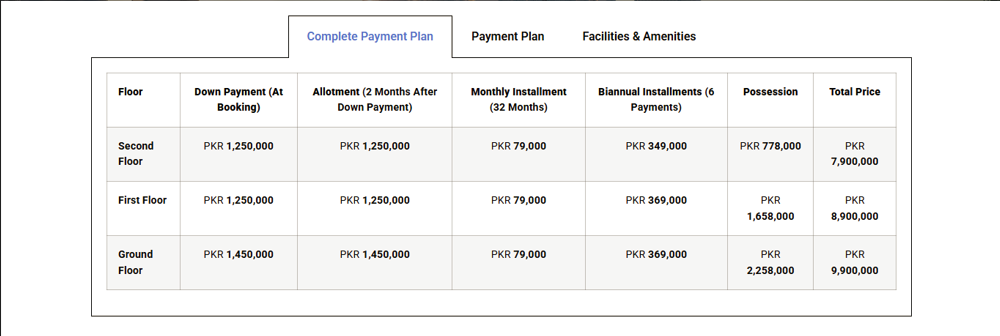
The payment plan section lists the method of instalment as well as total price or down payment details in a table format.
Why It’s Important
Makes buying more affordable: If a buyer sees flexible instalment plans it’s doubtful that he will just walk on by. The reason of putting the top-tier design studio in front of you to participate in the sale is we want you to trust our company and form the impression where you are dealing with professionals.
Disappears psychological barrier: a clear payment plan makes the purchase process seem doable, disburdened from marrying
Gallery Section – Visual Proof That Sells
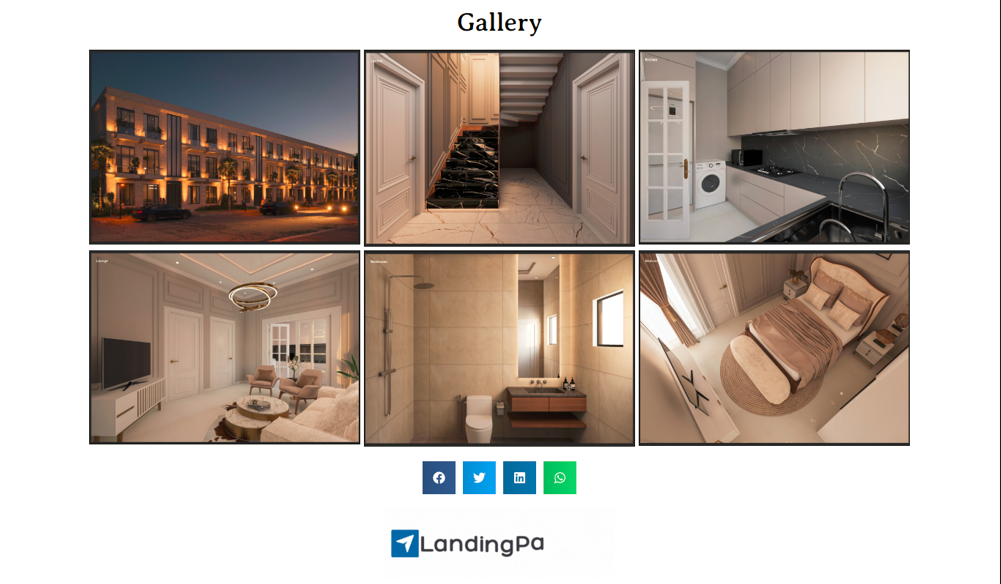
The gallery in grid layout shows living examples of the property, interiors and amenities. The reason of putting top design firms before you to share in a sale is because we want you to trust our company and to have the impression that you are dealing with professionals. The stronger the gallery, the more it sells not just the property but should give an experience.
Footer Section – Reinforcing Brand and Social Presence
We often ignore the footer, but it is one of a few powerful areas you have for branding. Footers can include some social media icons, company details and the logo.
Every part of a real estate landing page has its own role: from capturing the eye to pressing toward the finish.
As long as it’s designed intelligently, one of these landing sites should be able to accomplish:
- ✅ Get the attention of passersby
- ✅ Educate and entertain your visitors
- ✅ Establish trust and credibility
- ✅ Simplify decision-making
- ✅ Convert leadsleads effectively
To put it simply, a real estate landing page is not only a web site but also a digital salesman which works 24 hours a day every day.
Every part of this page forms the emotional and logical path that takes aimless wanderers seriously to the focal point buyers or investors.